

Analyzing the Passages: Leviticus 18:22 & 20:13
My own theological realizations on this topic didn’t happen overnight. It happened slowly, sitting at a desk surrounded by open lexicons and commentaries, wrestling with texts I had previously been told were plain and simple.
When the topic of same-sex relationships comes up, two passages from the Old Testament are almost always brought to the forefront:
Leviticus 18:22 “And you shall not lie with a male as lying with a woman; that is a detestable thing.”
Leviticus 20:13 “As for the man who lies with a male as lying with a woman, they have committed a detestable thing; they shall surely be put to death—their blood is on them.”
In his book Homosexuality and the Bible: Two Views, theologian Dan Via argues for the affirming position. However, he states that these two passages “present an unambiguous and unconditional condemnation of homosexuality.”
It is easy to see why so many read the text exactly that way.
But what happens when we look closer?
Let me show you what I found.
Let’s Look at the Language
Let’s sit with the actual words for a moment.
In both passages above, I added bold emphasis to the word “male.” Both occurrences are translated from the Hebrew word zakar.
This is where things get interesting. The writer chose zakar (which means “male”) rather than ish (which means “man”). It would have made perfect sense for the writer to say, “a man (ish) should not lay with another man (ish).”
But the writer deliberately mixed the two terms. An ish should not lay with a zakar.
Why?
Did they simply use a couple of different words for linguistic variety? Did they use distinct terms intentionally to make a specific point? What if the author is purposefully accentuating the maleness of the second man?
In the ancient world, societies understood the concept of effeminate men or men placed in submissive roles (the Akkadians, for example, called them kulu’u). If we look through that historical lens, these rules in Leviticus might actually feature God telling men not to penetrate other men who identify as heterosexually male.
In other words, this is considered by some to be a rule against the homosexual rape of heterosexual men.
If this is so, these two rules do not prohibit a man from having sex with a consenting, same-sex attracted man who is willingly penetrated. This would make these laws in Leviticus similar to the laws of the surrounding ancient nations, who strictly forbade the rape of an unwilling man but did not forbid consensual homosexuality.
(Though, as theologian Instone-Brewer notes, we can never know for sure what ancient laws have simply been lost to time.)
It leaves us with a lingering tension: We cannot know exactly why the writer worded the text this way. But it certainly opens a door many assume was closed.
The Idolatry Connection
Then there is the context.
What if the author specifically had idolatrous sex acts in mind?
This possibility isn’t pulled out of thin air. Both references to male-male sex in Leviticus sit right next to warnings about Molech, an ancient Canaanite deity. Leviticus 20 even opens with a strict command against offering infants to Molech.
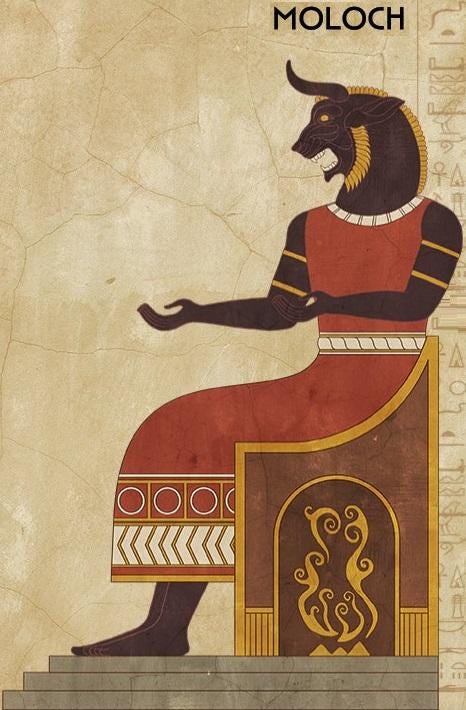
Do you see how the context shifts? Suddenly, we aren’t looking at a loving, covenanted and consensual relationship. We are looking at acts of pagan idol worship.
This idea finds deep support when we connect the scriptural dots:
The Sin of the Canaanites: Leviticus connects men having sex with males to the “sin of the Canaanites.”
Temple Prostitution: Later in 1 Kings 14:24 and 2 Kings 23:7, 13, the exact same language found in these Levitical passages is used to describe the male temple prostitutes of the Canaanites.
The Meaning of “Toevah”: Leviticus 18:22 refers to a man having sex with a man as toevah (translated above as “a detestable thing”). This term doesn’t primarily refer to an innate moral evil; it refers to ritual uncleanliness. Think of a menstruating woman who was considered unclean. Menstruation isn’t a “sin” by religious moral code, but was seen as “dirty” according to religious culture or imagery. Toevah is strongly related to idolatry and can sometimes simply mean “idol.”
In fact, late Jewish commentaries understood this to be an issue of idolatry rather than homosexuality. The Greek Septuagint understood it this way. Early Greek-speaking theologians understood it this way.
What if what is actually being prohibited in Leviticus is the idolatrous worship of other gods through sex rituals, rather than committed homosexual relationships?
Weighing the Contexts
To be fair, opponents of this view raise valid points.
The specific Hebrew term referring to temple prostitutes (qadesh) is missing from these Leviticus passages. Furthermore, they argue the link between the prohibition and Molech isn’t perfectly clear, pointing out that the rule is listed alongside other general sexual boundaries.
So, we are left holding dueling contexts.
On one hand, these rules sit within a list of general sexual laws. On the other hand, they are framed by the worship of Molech, the “sin of the Canaanites,” and the ritual impurity of toevah.
I believe that the laws against male-male sex relating to temple prostitution is a decently strong case. At least strong enough to dissuade us from confidently using these passages to attack homosexuality in the modern context we are considering it. However, as I spent time with these texts, I realized there is something else at play here as it relates to our modern discussions on homosexuality.
We will turn to that matter in the next post.
For now, I invite you to just sit with the tension. If you grew up believing these verses were a clear, flat condemnation, it can feel disorienting to realize the language is actually incredibly nuanced.
Breathe through it. You are not alone. We are in this together.